Douglas Arvidson is a past winner of the WICE/Paris Transcontinental International Short Story competition. His short fiction has been published in Paris, Prague, and in literary magazines in the United States and he was recently invited to be a staff writer for the Prague Revue, a cutting-edge, online literary journal (http://bit.ly/1mMT6ZC). The novels in his fantasy series, The Eye of the Eye of Stallion, include The Face in Amber, The Mirrors of Castaway Time, and A Drop of Wizard's Blood. His new novel, Brothers of the Fire Star, was selected as a finalist in the ForeWord Reviews 2012 Book of the Year national awards and as a finalist in three categories in the 2013 New Mexico-Arizona Book Awards: Action Adventure Fiction, Historical Fiction, and Young Adult Fiction. It has become part of the pantheon of Pacific literature and is now included in school literature programs. Brothers of the Fire Star is an adventure story set in the Pacific during World War II and concerns two boys of different races and cultures who escape the island of Guam in a small sailboat when the Japanese army invades. They must then struggle to survive as they master the secrets of the ancient Pacific navigators. Appropriate for young adults as well as adult readers, Brothers of the Fire Star is available on Barnes & Noble, Amazon.com (http://amzn.to/1j3axVk) and Crossquarter.com. Visit the author's website: douglasarvidson.com


Wednesday, October 24, 2012

A Wonderfull Time on Guam: Authentic Book Promotion

Tumon Bay, Guam in early morning from our hotel room window.

Guam: a far outpost on this fat round world, the place where America's day begins and where jet lag sets the mood for the sky traveler. We landed last Sunday, just at sunset, arriving from Honolulu after a two-night rest after arriving there from Virginia. I was beat, sagging and foggy and grumpy and so was my traveling companion (the usually patient, tolerant, smiling, hard-core-world-traveling wife, Terry).

It's rainy season here, the full-throttled-downpour-gusher time of year when huge black clouds form from nothing, instantly, in blue skies and the deluge that follows fills gutters and storm drains and then the blue sky returns arched with multiple rainbows. The humidity is something spectacular, making the 88 degree heat sauna rich and suffocating. Turns out our car rental agency doesn't have a desk at the airport so we have to pile our luggage and drooping bodies with six other people into a van designed to hold only six.

Even the air conditioning at the Hilton seems to have not been up to the challenge of removing the sullen moisture from the air. The corridor smells of dampness, the carpeting looks downtrodden, the windows overlooking the ocean are fogged. We grump and grumble as we settle in. It's really too early to go to sleep for the night, but heads hang low and eyes burn, so we surrender.

Awake at 4:30 a.m. of course, fully slept out and once again spunky, but who gets up at 4:30 except under duress? Toss and turn. "You awake?" So we get up at 5:00. Terry, with the ridiculous self-disciple reserved for true triathletes, gets her workout clothes on and heads down the fitness room. I go down to the lobby and buy a $5 cup of coffee and eat a zone bar.

Now, though, two days later, things have cleared up--both heads and skies--and we're zooming along. Terry off to meetings, me off to promote (authentically--see previous blog entry) my book. And it's all good news. In fact, wonderful news. The very people who seemed to studiously ignore my first two books are grabbing for this one with one hand whilst throwing cash at me with the other. I have a photo-shoot/interview scheduled with a reporter from the Pacific Daily News and another one with a writer from Island Traveler, a new magazine aimed at Asian readers. There is a book signing scheduled for the Navy Exchange on Saturday and I'm a guest lecturer at the University of Guam tonight at a creative writing class. I'm going to talk to 3rd graders tomorrow about the writing process and 6th graders on Thursday.

The difference between this book and the others?  This one is about Guam; it has a home-field advantage. It's beautiful to look at and wonderful to hold. The cover invites you in, the back-cover blurb grabs you. People who have read it, love it and are spreading the word.

I've got another five days here. We'll see what happens next.


Sunday, October 7, 2012

Authentic Marketing: The Art of Shame-Free Self Promotion

October 4th was Launch Day: I think everything is in place.


 I'm guessing that the most important thing about being a successful writer of novels is this: Have talent--lots of it--well developed talent honed through the years of slog and misery and rejection that makes the final success such a bitter-sweet experience.


Next--and I'm guessing here again--take your time and use that burnished talent to write something outstanding, something wonderful, something fresh, unique--something readers will want to pick up and not put down, something that will affect them deeply, something they will talk about to others. Word of mouth sells books.


 And the cover, yes. The cover needs to be as beautiful and unique and appealing as the story inside it. 


What now? Now comes the really painful part: Telling everyone how wonderful your book is. Shouting its glories from the rooftops, as it were, and this makes people like me feel just terrible. But recently I came across a wonderful term coined by Scooter Braun, Justin Bieber's  promoter, that takes the shame out of self-promotion: authentic marking.


 Here's the general idea of authentic marketing: Promoting a product that you know is of high quality. That is, your book is the real deal--you're not some hack selling cheesy drivel or scamming suckers into buying worthless scribbling.  You, with your burnished talent and careful craft, have created something that you know (and your editor and publisher and a hired professional reader or two agree with you) the reading public will love and benefit from. Authentic marketing is convincing as many of those readers as possible to buy the book.


Nowadays, of course, in this wonderful, writhing, boiling, exploding, cut-throat digital world, you need what's called a platform from which to launch your authentic marketing campaign. You--or your agent/representative--must be fluent in the dizzying world of professionally developed websites, Twitter, Facebook, LinkedIn, and blogs and all the other ways the Internet allows us to connect with anyone on the planet who might be interested in what you have to offer.


So here I go, shame-free because I'm pretty sure I'm marketing something authentic: My readers tell me I'm ready, my editor says the book is burnished, my publisher says, "This is going to be a great book." Initial responses are breathtakingly enthusiastic: "Best book I've ever read," "Wonderful read," "A real page turner," "Fantastic" and "If this doesn't make you, nothing will."


And I've got a pretty cool website with links all over the place like Amazon.com, my blog, my Twitter page, and lots of Facebook friends. And I'm linked in to LinkedIn. I've sent out press releases, done what I an to create that critical buzz.


Now we shall see if being an authentic writer and writing an authentic story and marketing it authentically will result in some authentic success. 


Wednesday, September 26, 2012

The Writer Visits a Middle School: All Things Bitter and Wonderful

Middle schoolers haven't changed a bit: But the old man? Yes, indeed.

The other day I did my yearly stint as a visiting author at a middle school in Georgia. In response to questions from the students, I talked about what it is like to be a writer: How long it takes to write a book? Do I like being a writer? And of course, "Where to you get your ideas?"

But the real question of the day, a question that went unasked was, "What is it like to be a middle schooler?" My memories of that time in my life are not completely pleasant. I went to a pretty good, small, country school. I had an intact family and I was clean and well fed. But still, being eleven or twelve or thirteen years old is a peculiar misery. I had zits, I was hopelessly insecure, girls were from another planet, I hated math, I wasn't a great athlete or a great student; the usual middle school complaints.

So, the other day, when I was standing up there in front of thirty or forty kids, looking out on their presumably innocent young faces, I could sense their pain. There was girl with a bad complexion, there was a boy who parents were, I had been told, always battling; there was kid who lived in a trailer with a mixed "family" of live-in drunks and lovers and who claimed he shot deer out in his back yard every day: "I just like to kill things," he told me.

So, what do I teach them about writing--which is really all about life? Right now, as they come into their full awareness of who and what they are, they are learning all those things bitter and wonderful about what it means to be alive.  These things will follow them the rest of their lives and maybe one or two of them will become writers and remember these years and mine the memories for great literature. I suspect, though, that most of them will simply grow up and somehow learn to deal with it all as they, too, muddle through.

Wednesday, September 19, 2012

Of Pumpkins and Potted Plants, Boats and Books, Old Friends and New Family: What We Did on Our Summer Vacation

I don't really have much of a green thumb. Out of a great tangled jungle of stems leaves and stalks came this single pumpkin: 30.4 lbs. and just look at the beautiful color.


I got pre-publication copies of my new novel, due to be officially released on October 4. Forgive me, but I am apologetically excited about how great it looks.


Here is my most immediate family, gathered together in my perfect little American town on the 4th of July. The little guy in the front, that's my newest grandson, Kiernan a.k.a. "Babyface Scarborough"


And here I am with a since-childhood friend and his wife. Rick and I started playing together when we were, oh, I guess maybe three or four years old. We've kept in touch, but only seen each other two or three times in the long, intervening years and it was very nice to get together.

My son, Eli-the-Yacht-Captain and his girl/mate steamed into town on a yacht delivery and asked if I wanted to help them take the boat up the Bay to Annapolis. (See previous blog entry.)

So, I see the pumpkin as bookends to the great, long, hot-hot summer. I planted the seed in May and harvested it in September. I love the pumpkin like I love the summer, full of rare surprises.

Tuesday, September 4, 2012

In Which We Navigate a Brand-New, 70-Ft, $3.8 Million-Dollar Yacht Up the Chesapeake Bay

This is a Horizon 69. My son, Eli, a commercial captain, and his long-time companion, Bailey, were hired to bring her up the coast from Ft. Lauderdale to Annapolis, stopping along the way to let brokers try to sell her. Here she is tied up at Cape Charles, VA, just across the Bay from VA Beach and down the penninsula from Onancock.


Captain Eli and His Mate, Bailey

The Galley/Salon


The Master Suite

The night before we leave Onancock for the final run to Annapolis, we host a cocktail party on the upper deck.

The morning of departure, Eli logs in and fires up the engines--two 380 H.P diesels.

Leaving Onancock, we steered from the upper bridge.

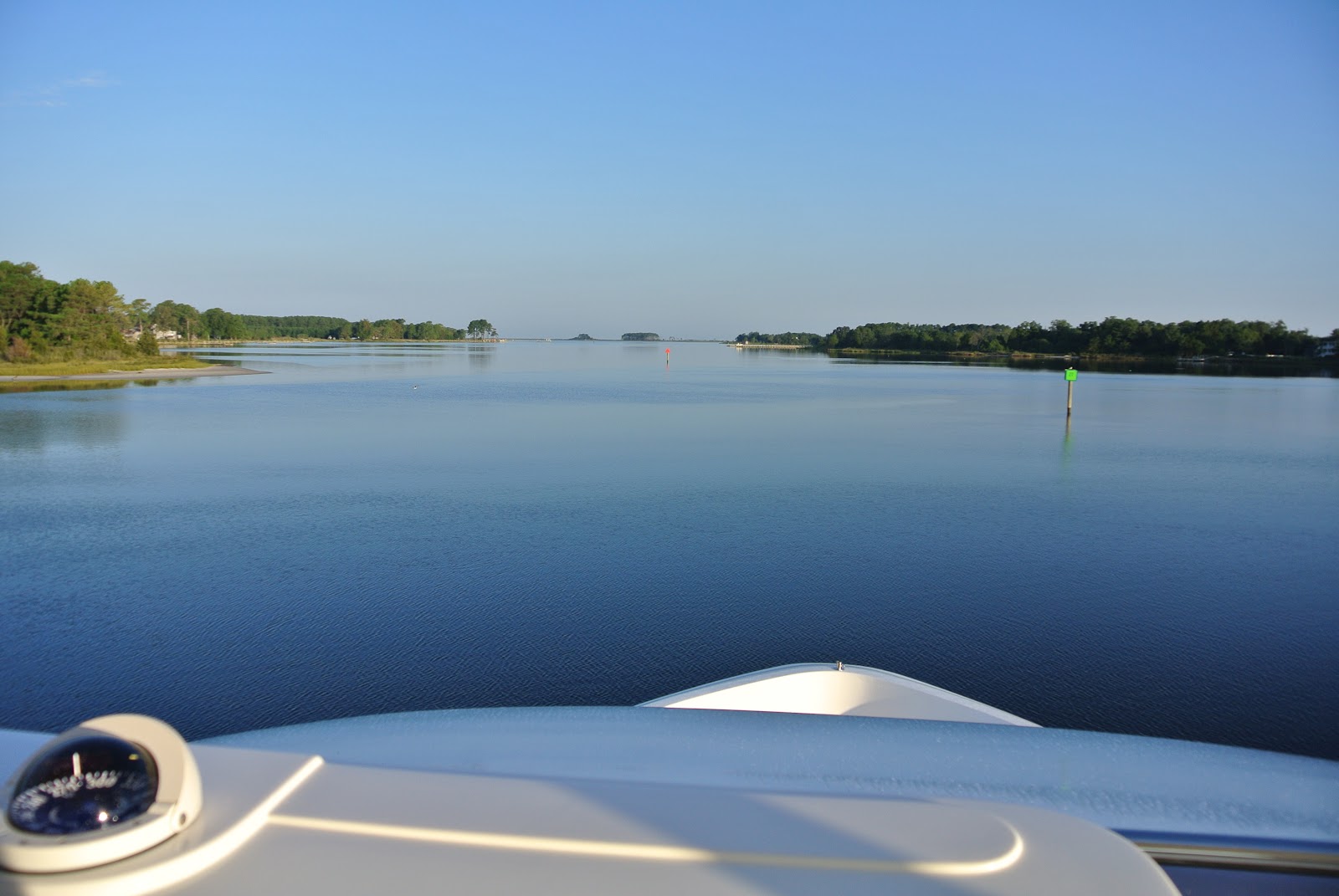
Onancock Creek at sunrise: We had perfect weather.

Onancock Harbor

The lower-bridge controls

In air conditioned comfort, we stand watch. It was a bit of a learning curve for me. In fact, I was overwhelmed.

Eli and Bailey have been running boats together for eleven years--she is, variously, mate/chef/chief steward. They just finished taking a 112-ft. yacht from Ft. Lauderdale, around the Caribbean, through the Panama Canal, and up to Mexico and San Diego.

As we approached Annapolis, we passed this very nice staysail schooner.

In Annapolis,we are dwarfed by the 130-ft Winning Drive, owned by the owner of the Baltimore Ravens.

The next morning, in Annapolis Harbor, I sit at the bridge, drink coffee, and watch the local traffic. The old joke is that Annapolis is a "drinking town with a boating problem." Nice.


Monday, August 13, 2012

Father and Son Run the Bulls: Royalty, Rabble, and Raw Cruelty

With my son, Eli, in front of the bull ring in Pamplona, 1993


Now, there was a summer--1993. We were living in Germany, Eli had recently graduated from high school. We had tried to reach Pamplona the summer before but a strike by French truckers blocked all the highways between Germany and Spain and we had to turn around, just barely making it back into Switzerland before running out of gas.

But now prospects looked good. No strikes on the horizon, a hot little Opal sedan with a four-on-the-floor and an engine that screamed at 100 mph. We hit the autobahn, crossed the French border in two hours flat, and slipped onto the peage, the French highway system. Down we zoomed, as I recall, Eli behind the wheel, six feet from the car ahead of us, the pedal to the metal. My heart in my throat, I began negotiating and finally, disgusted with my faint heart, he pulled over: "Alright, fine. YOU drive."

Across France, along the Pyrenees, toward San Sebastian, then up and over them and down into Pamplona, that Spanish town of Hemingway's greatest and continuing myth. Where to stay? We planned on camping and now found, a couple of miles outside town, a campground already filled to overflowing with an international cast of characters, prospective bull runners all. They were mostly from New Zealand and Australia, young men--and a few young women--off on "walkabout" for a couple of years.

We set up our tent right outside the men's latrine, under glaring lights that never shut off. Everyone was, of course, drunk and intensely involved in the process of getting drunker. The latrines were unspeakable with vomit and smeared feces. But, in the end, it didn't matter: We didn't come to Pamplona to sleep.

We walked into town and got there just before noon on the day the feria started--let me say, exploded. I went into a bank to get some cash, this being in the days before automatic bank tellers. While I was standing in line, a gun went off outside somewhere. A bank teller raised a glass of champagne, toasted the air, and drank: The party had started.

Once outside, I saw everything had changed. Where before the crowd was just milling around expectantly, everyone was now dancing, forming long conga lines and  swaying  around the square and along the streets. Music seemed to come from a thousand places, from the air itself. People sang, kissed, hugged, and most of all, drank sangria from glass bottles that, when empty, were simply smashed on the sidewalks or on the cobbles of the town square. Men urinated freely in alleyways and then, at night, anywhere and everywhere until the town was filled with the smell of it all: sangria and old urine and cigarette smoke and, always, always, always, twenty-four hours a day, loud rhythmic Spanish music.


Here's shot of the running I got off the Internet: Thanks, it's a good one.

They run bulls, six of them, every morning at 8:00. They are released from a pen across from a cathedral in downtown Pamplona some distance from the bull ring. A rocket is fired off to announce the opening of the gate and then another to signal the exit of the last bull into the street. You want the rockets close together because that means the bulls are running in a bunch and there is less danger of a single rogue wreaking havoc. You are in a crowd, you have a red bandanna around your neck, you hear the first rocket and the crowd starts to move, walking slowly, raising a rolled up newspaper in the air and chanting, "Ola! Ola! Ola!"

You have been told that the real danger is getting knocked down and stomped on by fellow runners--the danger from the bulls is secondary. This turned out to be true. In those days, though, I was still pretty fast, pretty agile, so when the crowd stopped walking and started running, I was with them, dodging and leaping. As we ran, we looked back over our shoulders for the first sighting of the bulls.

They came in two bunches of three, as I recall. The streets of Pamplona are narrow and so as the first bulls galloped by, I could  have easily lunged out with my newspaper and touched one--that's the purpose of the newspaper, to just touch a bull: count coups, display courage. I instead stepped aside into a doorway and watched them pass. Then, back out into the street, running, dodging, leaping until the next three came along.

I managed to get to the bullring in time to get through the gates before they closed them and now found myself in a crowd in the middle of the ring with thousands of people in the seats cheering us on. But what were we supposed to do?

The bulls we had just run were herded out of the ring and another group of younger steers were released into it. Now I understood: We were supposed to touch these steers with our newspapers for the entertainment of the crowd. I had become a bull fighter of sorts.

But anything more than touching a young steer with your newspaper is forbidden. One drunken young Aussie actually leaped astride a steer, went for a short ride, and fell off. When he stood up, a young Spaniard ran up to him and roundhouse punched him in the face, splattering blood and sending the Aussie to his knees; punishment for breaking the rules.

Then it was over. The steers were herded out of the ring and we were too, back out into the streets. It was all a heady experience.

But here are my last thoughts on this great adventure: Later that afternoon I went to the bull fights--I watched the bulls I had run that morning die in the ring. They were literally tortured to death. Stabbed first by mounted picadors, the animals were left to bleed, their neck muscles torn. When they had been sufficiently reduced, the matadors took them on. This was dangerous enough, of course. Though bled out and exhausted, the wounded animals famously take their toll.

I, one of the rabble, found myself seated in the stands among what seemed to me to be royalty--beautiful Spanish people, the young women stunning. They were cheering, applauding, thrilled to be there. I was feeling sick: nauseous, weak, light headed. At first I though it was something I had eaten on the street, but no--it was the shock of slaughter--the blood and the torment that had gotten to me. There is a very short list, it is said, of Americans who have watched two bull fights.

On the way back to Germany, as we drove along the foothills of the Pyrenees,  we stopped at Lourdes, the now garish town that caters to faithful Catholics who seek cures for their ailments by anointing themselves with the famous waters. In a line of the hopeful, I walked through the cavern, splashed myself, and asked for a cure for my imagined learning disability. That didn't work out for me. Perhaps I should have asked forgiveness for what I had done in Pamplona.

Hemingway in Pamplona: Royalty and Rabble embracing raw cruelty.

Monday, July 30, 2012

Hot Summer, Giant Pumpkins, and Good News Writing


The Pumpkin Plant that Ate Onancock
Dusty hot summer, mostly rainless. Even the sky is dusty, even the ocean and the Bay. But it is, apparently, a good summer for books, boats, reunions and raising  giant pumpkins.

It's also a good summer to be a writer, if you're me. I just received this email from the new publishers of the Prague Revue, the literary journal that published one of my first short stories back in the 90's:

Mr. Arvidson,


I wanted to notify you that we are relaunching The Prague Revue. Beyond inviting you to submit any new material at the provided address, I would also like to inform you that your story The Foreigner has been selected to be part of a web retrospective highlighting some of our favorite stories over the years. It will have a featured spot on the front page of the website, which we plan to go live with sometime within the next two weeks. If we could obtain your permission to include this story on our webpage we would be very grateful. I trust the writing is going well and look forward to hearing from you. If you have any further questions or comments please e-mail back at this address.


Thank You,


Shaan Joshi
Managing Editor
The Prague Revue
V Jámě 7 110 00 Praha
thepraguerevue@gmail.com

So, that was very gratifying. I haven't written a short story in many years but his has me thinking.

 As are the reader responses to Brothers of the Fire Star which, though not officially released until October 4th, is being sold locally:

 I just finished reading your latest book. Congratulations! A great read AND you got all the facts right! Can we sell this in the Guampedia bookstore? Everyone in Micronesia should read it. You, my friend, did a great job in portraying a moving story with lots of history and culture of the Marianas and the Carolines.  Shannon M., Guam


I just finished Brothers of the Fire Star... one of the best books I have ever read, & sure to be one of the most memorable... I'll be thinking about that ending for some time before I move on...Larry R, Okinawa


That's just a couple. Happily, all the reactions I've received run along those lines. Happily? Actually, no, it's thrilling. When you read a review like that, your heart races and your stomach jumps.

As for the giant pumpkin plant, the story goes like this: I've always wanted to grow a giant pumpkin. You know, the kind you see on news reports, the kind that weighs a hundred pounds. And so, my son-in-law says, "Well, we bought a giant pumpkin last Halloween and I saved some seeds." He handed me a sealed plastic bag. It felt slightly illegal. I looked over my shoulder; had the neighbors seen this transaction?

So, in May, I planted three of them. One grew a stunted plant that went nowhere. One grew a smaller shoot that is doing okay. But the last one is almost scary. It is growing a foot a day, the vine moving along the ground like a sentient creature, the lead shoot standing up like a green snake with its tendrils reaching out, finding the way. I grew up on a farm with a big garden and I never saw anything like this. I keep watering it, feeding it, talking to it. Maybe I should stop. It's getting out of hand. I don't dare lie down on that chaise lounge--I could wake up inside a pumpkin.